Sleep in Perimenopause: What's Really Happening
Edited & Reviewed by Kira Hensley, M.A., M.Ed., Registered Psychotherapist ~ Women's Mental Health, Anxiety & Perimenopause
Updated April 2026. 9 min read
TL;DR Sleep changes in perimenopause are physiologically driven - hormonal shifts alter every layer of sleep: how easily you fall asleep, how deeply you rest, and how readily you wake through the night. Understanding what is actually happening is the first step toward support that genuinely fits.
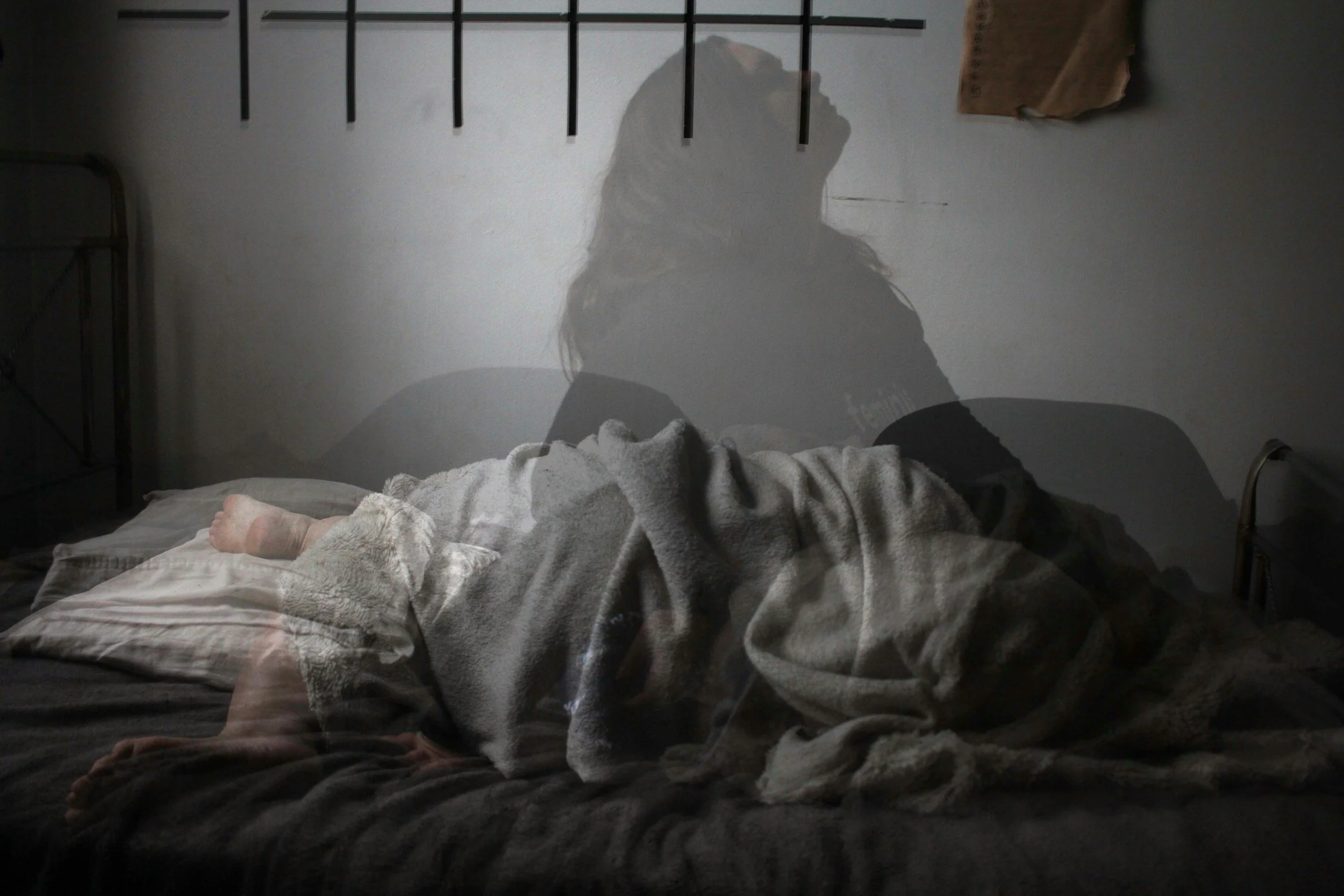
You used to be a good sleeper. Maybe not perfect, but reliably functional — you could fall asleep without effort, stay asleep, and wake feeling like yourself. Then perimenopause arrived, and sleep became something you no longer recognize.
Now you're lying awake at midnight for no clear reason. Waking at 3am and staring at the ceiling. Sleeping what looks like a full eight hours and waking more depleted than when you closed your eyes. And the advice you've been offered — better sleep hygiene, less caffeine, earlier bedtimes — has barely touched it.
This blog is about what is actually happening to sleep in perimenopause: the biology, the architecture, and the mechanisms underneath the disruption. Because understanding what's changed — really changed — is what makes it possible to seek support that actually fits.
For a broader overview of how perimenopause affects mental health, start with The Definitive Guide to Perimenopause and Mental Health.
For the mood consequences of disrupted sleep, see Menopause, Sleep, and Mood: How Exhaustion Changes Everything.
For the anxiety dimension of night waking specifically, see Nighttime Anxiety in Perimenopause: Why You Wake Afraid.
Why Is Sleep So Different in Perimenopause?
If you feel like sleep changed without warning — or like it's unravelling faster than you can adapt — this is a recognised pattern that many women describe. There is often a distinct turning point when sleep that had always been reliable becomes something unpredictable and elusive, frequently before other perimenopause symptoms become obvious.
Four hormones are central to the sleep changes of perimenopause: estrogen, progesterone, cortisol, and melatonin. Progesterone has a naturally calming, GABA-like effect on the nervous system, and as it declines, so does the buffer that once eased you through the night. Estrogen fluctuates unpredictably, affecting temperature regulation, serotonin production (a precursor to melatonin), and how your brain processes stress.
Melatonin — the hormone that signals to the body that it is time to sleep — also declines during perimenopause. As that signal weakens, falling asleep becomes less automatic and waking through the night more likely. Cortisol shifts too, with its early-morning rise arriving earlier and more forcefully than it used to — and together, these four create a cascade affecting every layer of sleep: how easily you enter it, how deeply you rest in it, and how readily you wake from it.
Understanding which aspect of sleep is most disrupted for you — onset, maintenance, or overall quality — is a useful starting point, because these often call for different kinds of support. A family doctor or menopause specialist can manage the hormonal picture; a therapist can address the nervous system patterns (anxiety, stress, depression) those hormonal changes may activate.
Why do I sleep but never feel rested?
If you're sleeping through the night but waking feeling like you haven't rested, this section is specifically for you. It can be disorienting — and quietly demoralizing — to feel exhausted even when the hours on paper look adequate, and to suspect that no one quite believes how tired you are.
Sleep isn't a single state. It cycles through stages of lighter to deeper sleep, and each stage does distinct work. Deep slow-wave sleep is when the body does its most significant repair: consolidating memory, supporting immune function, releasing growth hormone, and resetting the stress response. REM sleep is when emotional processing happens.
In perimenopause, hormonal changes shift the balance of these stages: declining melatonin disrupts the timing of sleep cycles, while the broader hormonal picture means less time in deep restorative sleep and more time in lighter stages where waking is easier and rest is less complete. This is why many women describe sleep that feels thin, restless, or somehow unsatisfying even when hours look fine — because the quality of those hours has changed.
CBT-I (Cognitive Behavioural Therapy for Insomnia) specifically targets sleep quality, not just sleep duration. It works by reducing the hyperarousal that keeps the nervous system in lighter sleep stages, helping to restore access to deeper, more restorative sleep over time. If sleep feels non-restorative despite adequate hours, this distinction is worth raising explicitly with your family doctor and CBT-I trained therapist.
Why Can't I Fall Asleep the Way I Used To?
Lying awake at the beginning of the night with your mind running, body tense, unable to switch off when you desperately need rest, is one of the more quietly cruel aspects of perimenopause sleep disruption. If your brain seems to activate the moment your head hits the pillow, this is a recognised response to the hormonal changes of perimenopause — and there are specific reasons it happens.
Sleep onset difficulty in perimenopause has both physiological and psychological roots. Declining progesterone removes a natural sedating effect that the nervous system has long relied on; without it, the transition from wakefulness into sleep becomes less smooth and more effortful. Cortisol dysregulation can keep the body in a low-grade activated state well into the evening.
Over time, the bed itself can become associated with wakefulness and effort — a conditioned arousal response that both ACT and CBT-I address directly. ACT specifically helps by reducing the struggle against wakefulness: when sleeplessness is met with acceptance rather than resistance, the nervous system has more room to settle. CBT-I restores the sleep-bed connection.
Mindfulness-based approaches are particularly useful at bedtime. It helps to shift the conditions in which the nervous system can release its hold on the day. A therapist working in this framework can help you build a personalized practice.
Why Do I Keep Waking Through the Night?
Waking repeatedly through the night (and lying there unable to return to sleep) carries a specific kind of exhaustion. The fragmented nature of it means you never quite get enough of anything: not enough depth, not enough continuity, not enough rest. If this has become a nightly pattern, it is worth understanding the mechanisms driving it.
Night waking in perimenopause is usually produced by overlapping physical causes. Night sweats and hot flashes are among the most common: a sudden rise in core body temperature activates the sympathetic nervous system, producing a jolt of alertness even before you're fully conscious. Overnight dips in blood glucose (a result of shifting insulin sensitivity) can trigger a small adrenaline surge that surfaces as sudden, disorienting waking.
Changed sleep architecture means you're spending more time in stages where even minor internal disturbances are enough to bring you fully awake. And once awake, a nervous system less buffered by progesterone may struggle to settle back down.
If night sweats or hot flashes are a significant factor, discussing vasomotor symptom management with your family doctor is a worthwhile conversation. Addressing the physical trigger can reduce the frequency of waking meaningfully. For the difficulty returning to sleep once awake, CBT-I techniques and parts-based work in therapy can help you build a calmer relationship with the waking itself.
Why Doesn't Sleep Feel Restorative Even When I Do Sleep?
"I slept, but I still feel exhausted" is one of the most common (and most dismissed?) things women in perimenopause say. If you've been told your sleep looks fine on paper but you wake feeling depleted, your experience is real. The problem isn't how long you're sleeping. It's how deeply.
The restorative quality of sleep depends not just on duration but on the proportion of time spent in deep slow-wave sleep. This is the stage when growth hormone is released, immune function is supported, cellular repair occurs, and the stress response is reset.
As sleep architecture shifts in perimenopause, slow-wave sleep is often reduced, sometimes significantly, even when total sleep time looks the same. What remains is a higher proportion of lighter sleep: technically present, but not deeply restorative. The result compounds across weeks and months, which is part of why perimenopause fatigue can feel different from ordinary tiredness — deeper, less responsive to rest, and harder to recover from between nights.
CBT-I targets sleep quality specifically, working to increase time in deeper sleep stages by reducing hyperarousal and stabilising the sleep-wake cycle. If you've been experiencing non-restorative sleep for more than a few weeks, naming this explicitly — rather than simply reporting that you're "not sleeping well" — can help your family doctor and therapist direct the right support.
Could Something Else Be Disrupting My Sleep Too?
Before attributing sleep disruption entirely to hormones, good clinical practice involves ruling out other conditions that are common in midlife women, can present similarly, and have their own targeted treatments. A thorough conversation with your family doctor is the right starting point — and advocating for that conversation is worthwhile.
Conditions worth raising with your family doctor:
Sleep apnea is significantly under-diagnosed in women around menopause. The presentation often differs from the classic profile — instead of obvious snoring, it may look like non-restorative sleep, persistent daytime fatigue, and morning headaches.
Thyroid dysfunction, more common in midlife women, can produce sleep disruption, anxiety, and fatigue that closely mimic menopausal symptoms and are worth distinguishing.
Restless legs syndrome becomes more common around menopause, and the urge to move that characterizes it can make falling and staying asleep difficult. It has targeted treatments and is worth naming specifically to your family doctor if you have symptoms.
Iron deficiency — including ferritin levels in the low-normal range, is one of the more common and easily addressed contributors to both restless legs and lighter, more fragmented sleep.
Once other contributing factors have been assessed, the hormonal picture becomes clearer — and any treatment, whether medical or therapeutic, can be directed more precisely at what is actually driving the disruption.
Why Does Menopausal Sleep Disruption Feel So Hard to Fix?
If you have tried everything — the checklists, the supplements, the cooling pillow — and still cannot sleep well, the reason is that most standard sleep advice was developed without accounting for hormonal sleep disruption, and applying it to a physiology that has fundamentally shifted tends to produce frustration rather than results.
Sleep hygiene guidance is designed for behavioural sleep problems. When disruption is hormonally driven and nervous-system mediated, rules applied from the outside have limited reach — and the pressure to follow them can actively make things worse.
The “anxiety-about-sleep” loop is particularly significant here: the more importance placed on getting sleep right, the more the nervous system treats bedtime as a high-stakes performance. Vigilance and sleep are neurologically incompatible, so the effort itself becomes the obstacle. Sleep isn't something you do — it's something you allow. And the conditions for allowing it are different when your hormones are shifting.
The hormonal conditions underlying that shift need to be addressed with your family doctor or menopause specialist. What CBT-I works on is a different layer — the pressure, the hyperarousal cycle, and the conditioned wakefulness that take on a life of their own once sleep has been disrupted for long enough. A therapist trained in CBT-I can help you address this layer.
What Actually Helps Sleep in Perimenopause?
After so many approaches that haven't worked, it can be hard to believe that anything will. But there are evidence-based ways of supporting menopausal sleep that work with the nervous system rather than demanding better performance from it — and the evidence for them is meaningful.
Support that genuinely helps tends to operate across several levels at once:
Medical treatment of vasomotor symptoms — through HRT or other approaches — can meaningfully reduce the night sweats and temperature-driven waking that fragment sleep at the physical level. For many women, this is the most direct intervention for that particular driver.
CBT-I has a strong evidence base for menopausal insomnia specifically, with effects that outlast sleep medication. It works by reducing hyperarousal, stabilising the sleep-wake cycle, and rebuilding the body's confidence in its own ability to sleep.
Mindfulness-based approaches support nervous system regulation at bedtime and reduce the reactivity that makes disruption worse over time.
ACT addresses the struggle against wakefulness — the exhausting internal war that intensifies insomnia — by building a different relationship with sleeplessness itself.
Parts-based therapy adds depth when sleep disruption connects to older nervous system patterns, or when hypervigilance at night seems to go beyond what hormones alone explain.
The goal of sleep support in perimenopause isn't perfect sleep. It's enough rest to restore emotional and physical capacity. Working with a therapist who understands the perimenopause landscape means support can be adapted to your hormonal picture, your nervous system, and your life — rather than handed to you as a protocol designed for someone else.
Frequently Asked Questions
Why did my sleep change so suddenly in perimenopause? For many women, it happens because progesterone — the hormone with the most direct calming effect on the nervous system — tends to decline earlier in the perimenopause transition than estrogen, removing a key buffer before other symptoms even appear. Hormonal shifts can happen quickly, and disrupted sleep is often the first signal that something is changing, often arriving before hot flashes or irregular periods become obvious.
Is it normal to wake multiple times a night during perimenopause? Yes. Fragmented sleep is one of the most consistently reported experiences of the menopausal transition, affecting a significant proportion of women. Lighter sleep architecture, vasomotor symptoms, and changes in cortisol timing all contribute. Frequent night waking is worth addressing rather than simply accepting, because chronic sleep fragmentation has cumulative effects on mood, cognition, and emotional resilience.
How long does sleep disruption last in perimenopause? Disrupted sleep can improve meaningfully with active support, even before the hormonal transition is complete. Perimenopause itself can span two to ten years, and sleep patterns tend to follow individual hormonal timelines rather than a fixed schedule. Women who engage with appropriate treatment — hormonal, therapeutic, or both — tend to experience meaningful improvement without needing to wait it out.
Can HRT help with sleep in perimenopause? For many women, yes — particularly when vasomotor symptoms like night sweats are a significant driver of waking. By stabilizing estrogen and supplementing progesterone, HRT can reduce the temperature-driven disruptions and nervous system surges that fragment sleep. That said, HRT works at the hormonal level; the psychological and nervous system patterns that perimenopause activates often benefit from therapeutic support alongside it.
What is the difference between perimenopause insomnia and just getting older? The key difference is the hormonal layer that perimenopause adds on top of normal age-related changes. Sleep does shift gradually across midlife for everyone — circadian rhythms move slightly and sleep becomes somewhat lighter. But perimenopause produces more pronounced disruption, more frequent waking, and a more significant loss of deep restorative sleep. Crucially, the hormonal component means that targeted support — including HRT and CBT-I — can produce real improvement, rather than simply helping you manage the inevitable.
Sleep in Perimenopause Deserves More Than Waiting It Out
Sleep in perimenopause is genuinely disrupted — at the hormonal level, the architectural level, and the nervous system level simultaneously. What you're experiencing is not a failure on your part, a sensitivity to normal aging, or something you need to simply push through.
Understanding the mechanisms doesn't restore sleep overnight. But it changes what you look for — and makes it possible to find support that actually fits your biology, rather than advice designed for a different problem entirely. The right support exists. You don't have to keep arriving at morning exhausted and without answers.
I'm Kira Hensley, a Registered Psychotherapist in Whitby, Ontario and the founder of Psychotherapy for Her — Durham Region's first psychotherapy practice specializing in perimenopause. I work with women navigating anxiety, self-doubt, and the mental health challenges of midlife, in person and virtually throughout Ontario. Reach out to get started.
Sources
North American Menopause Society (NAMS) — Sleep and Menopause
Cognitive Behavioural Interventions for Sleep in Perimenopausal Women
The information on this website is for informational purposes only. It is not intended to be a substitute for professional medical advice, diagnosis, or treatment or to replace your relationship with your health care provider. Always seek the advice of your physician or other qualified health provider with any questions you may have regarding a medical condition. Never disregard professional medical advice or delay in seeking it because of something you have read or seen on this site.