Why Perimenopause Makes You Feel Like You’re “Losing It” - And Why You’re Not

If you’ve hit your 40s or 50s and suddenly feel more emotional, more overwhelmed, more irritable, more forgetful, or more reactive than you’ve ever been, you are not alone — and you are not “losing it.”
Women describe this stage in remarkably similar ways:
“I don’t recognize myself.”
“Everything feels harder.”
“I’m so emotional — it’s embarrassing.”
“I snap so easily now.”
“My brain doesn’t work the same.”
“I feel fragile in a way I never did before.”
This can feel terrifying, especially for women who have always been competent, steady, high-functioning, and able to handle an impossible load. But these changes aren’t signs of a personal unraveling. They are signs that your biology and nervous system are undergoing a major transition.
Let’s break this down in a way that makes sense — not pathologizing, not minimizing — just honest, compassionate clarity.
1. You’re Not “Losing It” — Your Hormones Are Changing the Way Your Brain Works
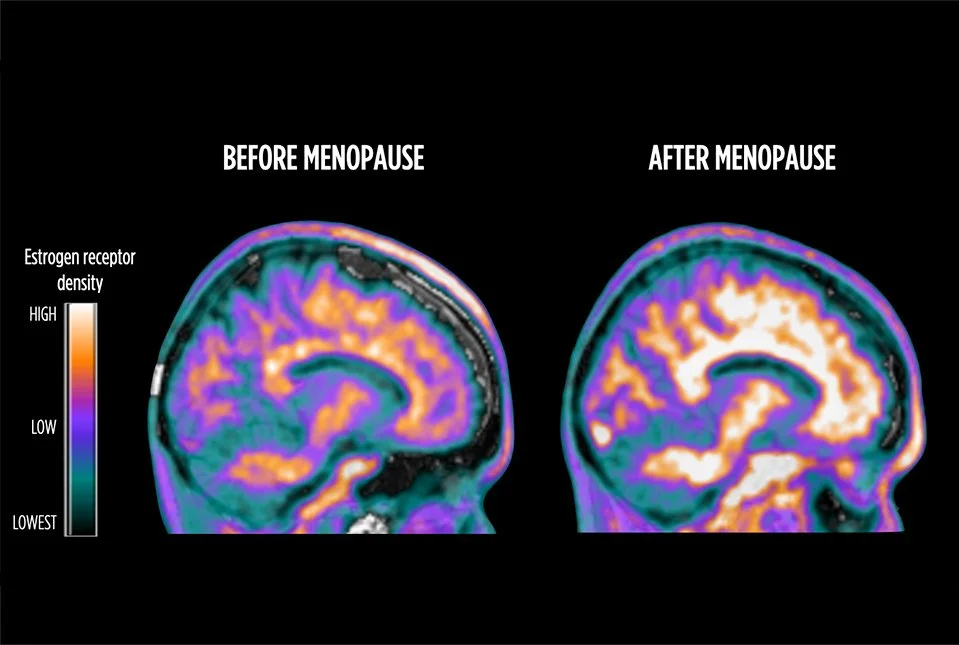
The brain seems to try to compensate for the drop in estrogen over perimenopause by increasing the number of estrogen receptors in the brain.
Scans Show Brain's Estrogen Activity Changes During Menopause. (2024). Retrieved from Weill Cornell Medicine Newsroom.
Perimenopause is a neurological transition as much as a reproductive one. The fluctuations in estrogen and the decline in progesterone affect the brain systems involved in:
stress regulation
mood
memory
attention
sleep
emotional regulation
Progesterone — the calming, soothing hormone — declines significantly in early perimenopause. Estrogen begins to rise and fall unpredictably. This combination makes your nervous system more reactive and less buffered.
The result is a nervous system that feels far more exposed than it once did. You may notice that emotions land with greater force, that your patience is thinner, and that situations you once handled with ease now feel overwhelming. Your thresholds shrink without warning, and your emotional bandwidth tightens in ways that can leave you feeling reactive, overstimulated, or simply “at capacity” much sooner than before.
This isn’t character change. It’s chemistry.
2. Your Sleep Is Disrupted — And That Changes Everything
Sleep disturbance is one of the most powerful contributors to feeling “off.” And perimenopause disrupts sleep in multiple ways:
night sweats
early-morning awakenings
cortisol spikes at 2–4 a.m.
restless, shallow sleep
When your sleep becomes fragmented, everything else feels more challenging and “off:”
Your anxiety increases.
Your irritability spikes.
Your impulse control decreases.
Your memory falters.
Your ability to cope shrinks.
Most women underestimate the role sleep plays — but poor sleep alone can make a woman feel like she’s unraveling. And in perimenopause, it’s incredibly common.
3. Cognitive Changes Make You Feel Unmoored
If you’ve found yourself losing words, forgetting what you were about to say, walking into rooms with no recollection of why, or struggling to focus — it’s not dementia and it’s not your intelligence slipping.
It’s your brain adapting to hormonal chaos.
Estrogen influences how efficiently neurons communicate. When levels fluctuate, cognitive processing becomes less predictable. That “foggy,” “glitchy,” or “scattered” feeling is a normal part of this transition — but it often catches women off-guard and fuels fear that something is deeply wrong.
Your brain is rewiring under stress. Read more about this in my post discussing how hormonal changes affect your cognition during perimenopause.
4. Your Emotional Load Is the Heaviest It’s Ever Been

Your Emotional Load Is the Heaviest It’s Ever Been
Perimenopause tends to collide with a woman’s most demanding life chapter. Many of us have teenagers or young adults transitioning to a new life. Our parents are aging, and possibly need supporting emotionally, physically, or medically. We are in the height of our careers, with all the associated stressors. Not to mention, we are still carrying the mental load of being the woman who runs the household.
So when your internal resources shrink, but the external demands stay the same (or increase), it creates a perfect storm.
Women say:
“I used to handle this… why can’t I now?”
Because you’re trying to do the same amount of work with less bandwidth, less sleep, and less hormonal support.
5. Old Wounds and Old Patterns Resurface
When your nervous system becomes more sensitive, emotions you’ve managed or minimized for years can rise back to the surface. Women who have been the “strong one” often find themselves overwhelmed in ways they’ve never allowed themselves to be.
This is your system asking for care.
Perimenopause is a psychological turning point — one that makes emotional truths sometimes harder to ignore.
6. You Feel More Reactive Because Your Buffer Has Thinned
Your pre-perimenopause brain had more hormonal cushioning which gave you more tolerance, flexibility and emotional elasticity.
Now, due to a changing hormonal environment, new life stressors, and lack of sleep, your threshold is lower.
You’re not overreacting — you’re reacting with fewer internal resources than you had before.
7. You Are Not Broken — You Are in Transition
Women often fear that these changes mean they’re aging poorly, falling apart, or becoming someone they don’t recognize. But perimenopause is not a decline — it’s a recalibration. It’s a season where your biology demands your attention because it’s doing work beneath the surface.
You are not losing yourself.
You are reorganizing.
You are moving through a natural stage that affects almost every woman — but is rarely explained, named, or validated.
When we name what’s happening, the shame softens. When the shame softens, women begin to feel like themselves again.
A final reassurance
You’re not imagining it. You’re not dramatic. You’re not weak. And you’re definitely not “losing it.”
Your body and mind are navigating one of the most underestimated transitions of adulthood — and you deserve support, clarity, and compassion as you move through it.
And you will move through it.
There is steadiness on the other side of this.
If you’re recognizing yourself in these changes and want a deeper understanding of how perimenopause affects mood, stress, sleep, and your nervous system, my full guide — The Mental and Emotional Symptoms of Perimenopause — offers a comprehensive, compassionate look at what’s happening in your body and why it feels so overwhelming.
The information on this website is for informational purposes only. It is not intended to be a substitute for professional medical advice, diagnosis, or treatment or to replace your relationship with your health care provider. Always seek the advice of your physician or other qualified health provider with any questions you may have regarding a medical condition. Never disregard professional medical advice or delay in seeking it because of something you have read or seen on this site.