Perimenopausal Anxiety vs. General Anxiety: How to Tell the Difference
Edited & Reviewed by Kira Hensley, M.A., M.Ed., Registered Psychotherapist ~ Women's Mental Health, Anxiety & Perimenopause
Updated March 2026. 12 min read
Key Takeaway
Perimenopausal anxiety and generalized anxiety disorder can look very similar, but they have different patterns, triggers, and treatment paths. Understanding which one you're dealing with — or whether both are present — makes it much easier to get help that actually works.
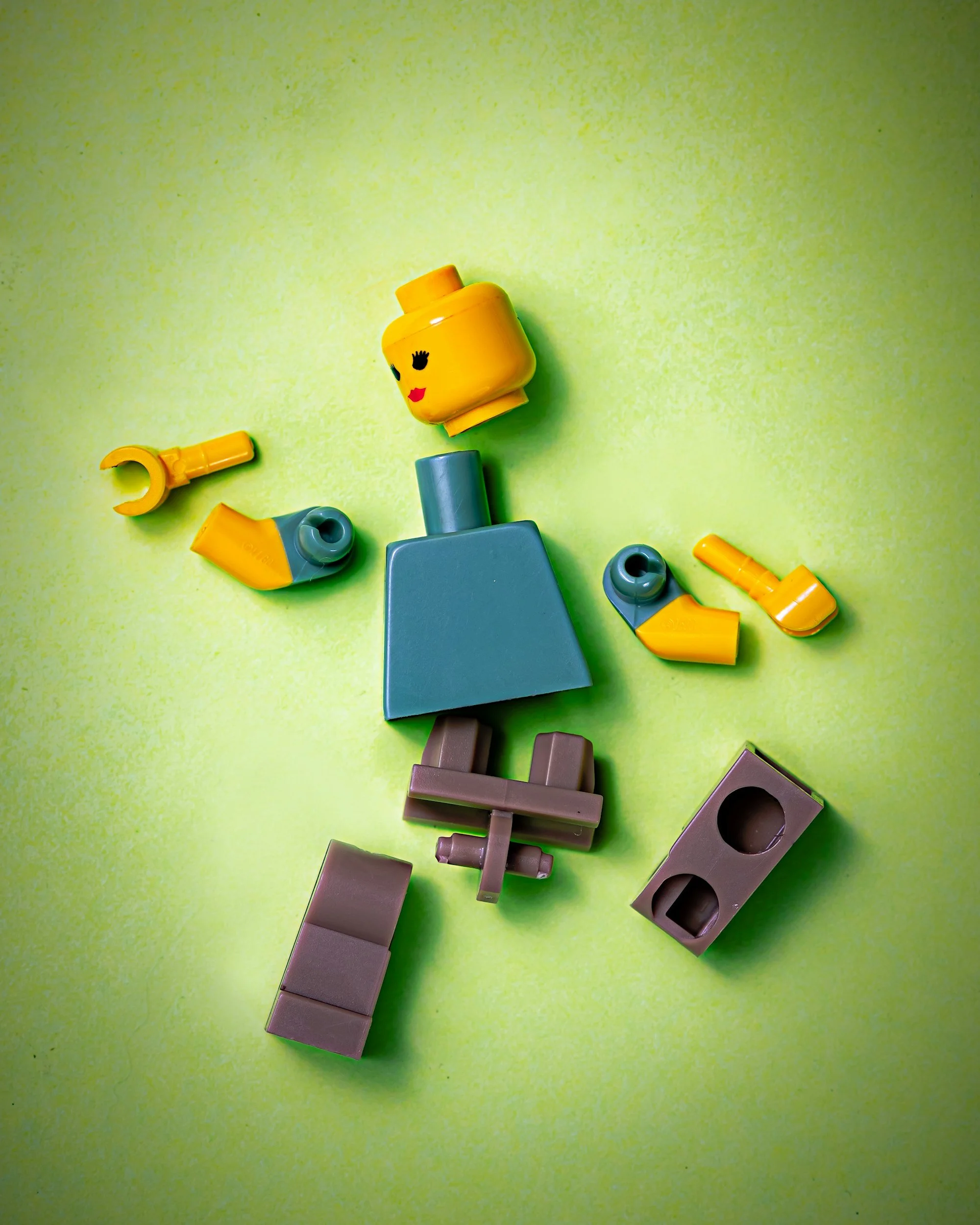
If you've started feeling anxious in ways that don't quite fit your life — a racing heart before a routine meeting, dread arriving at 3am for no clear reason, or an edginess that feels almost physical — you're not alone, and you're not imagining it.
Perimenopausal anxiety is real, recognized, and extremely common. But because it shares so many features with generalized anxiety disorder (GAD), it often gets misidentified. Women get prescribed treatments aimed at the wrong target. Or they spend years wondering whether their anxiety is "real" or whether something hormonal is going on.
It can be both. And knowing the difference changes everything about how you approach it.
Why does perimenopause cause anxiety in the first place?
If anxiety is new for you — or has escalated significantly in your 40s — it makes sense to feel confused about where it's coming from. You may not have changed jobs, your relationships may be stable, and nothing obvious has happened. Yet the anxiety is there.
Estrogen plays a significant but often underestimated role in regulating mood. It modulates serotonin, dopamine, and GABA — three key neurotransmitters that affect how calm, rewarded, and settled you feel. During perimenopause, oestrogen doesn't drop in a smooth, gradual line; it fluctuates erratically, sometimes spiking before it falls. These fluctuations — not just the decline — are what many women's nervous systems find destabilising.
Progesterone, which has a natural calming effect partly through its influence on GABA receptors, also declines during perimenopause, often earlier than oestrogen does. Lower progesterone can feel like the quiet underpinning of your mood has been quietly removed.
Additionally, disrupted sleep — which affects the vast majority of perimenopausal women — compounds anxiety considerably. Poor sleep elevates cortisol, amplifies threat-detection in the brain, and reduces emotional regulation capacity. By the time many women notice their anxiety, several biological factors may already be reinforcing each other.
If you've been wondering whether your anxiety might be connected to where you are in your reproductive cycle, that instinct is worth taking seriously. The next step is understanding what makes it distinct from anxiety that has other roots.
📖 If you’re looking to get an overall understanding of mental health and perimenopause, a good place to start is my Definitive Guide to Perimenopause and Mental Health.
What does generalized anxiety disorder actually look like?
Understanding what generalized anxiety disorder is — properly, not just "worrying a lot" — helps clarify what sets it apart from the hormonal kind. Many women carry a vague sense that their anxiety is a personality trait, a character flaw, or simply the cost of being a high-functioning, conscientious person. That framing, while understandable, isn't accurate or helpful.
GAD is characterised by persistent, difficult-to-control worry across multiple areas of life — work, health, relationships, money — lasting most days for at least six months. It typically involves physical symptoms like muscle tension, restlessness, fatigue, and difficulty concentrating. Importantly, GAD tends to be relatively constant: it may have better and worse periods, but it doesn't reliably track with your menstrual cycle or fluctuate dramatically week to week.
GAD often has identifiable roots — early experiences with unpredictability or threat, attachment patterns, or accumulated life stressors that have never fully resolved. It responds well to psychological therapies, particularly CBT and ACT, as well as certain medications. The nervous system dysregulation at its core is real, but it's shaped primarily by psychological and relational history rather than hormonal shifts.
It's also worth noting that GAD and perimenopausal anxiety aren't mutually exclusive. If you've had anxiety for most of your adult life and it's now getting dramatically worse in your 40s, both things can be true simultaneously — and both deserve attention.
Knowing which picture fits your experience isn't about getting the right label; it's about making sure the support you seek actually matches what's happening in your body and mind.
Does your anxiety follow a pattern through the month?
One of the most useful questions to ask yourself is whether your anxiety has a rhythm. For many women, noticing a hormonal pattern is what eventually connects the dots — but it can take time to recognise because the pattern isn't always obvious, and we're often not taught to track our moods in relation to our cycles.
Perimenopausal anxiety often intensifies in the luteal phase — the two weeks between ovulation and menstruation — when progesterone is rising and then falling. This is also the phase most associated with PMS and, in more severe cases, PMDD. In perimenopause, anovulatory cycles (where ovulation doesn't occur) mean progesterone may not be produced at all in that cycle, which can make luteal-phase anxiety more pronounced and unpredictable. Some women notice their worst anxiety in the days just before their period; others find it peaks around ovulation or in the days after.
Generalized anxiety disorder, by contrast, doesn't tend to fluctuate according to cycle phase. It may worsen with identifiable stressors — a difficult week at work, a conflict in a relationship — but it doesn't reliably lift and fall in sync with your hormones.
Tracking your mood, sleep quality, and anxiety levels alongside your cycle for two to three months can be genuinely illuminating. Cycle tracking for perimenopause doesn't need to be complicated — even a simple rating scale in a notes app can reveal patterns that feel murky in real time.
If you notice consistent windows where your anxiety is manageable alongside windows where it's much harder, that cyclical quality is meaningful clinical information worth sharing with your GP or gynaecologist.
How does perimenopausal anxiety feel different in the body?
Anxiety always has a physical dimension — that's what makes it so exhausting. But women often describe perimenopausal anxiety as having a distinctly somatic quality that feels different from the anxious thoughts and worry loops they may be more familiar with. It can feel more like a state your body is in than a thought pattern your mind is running.
Common physical presentations of perimenopausal anxiety include heart palpitations, a sudden feeling of internal agitation or "jumpiness," chest tightness, and a low-level hum of adrenaline that doesn't seem connected to anything in particular. Hot flashes can trigger or worsen acute anxiety, partly because the surge in adrenaline that precedes a flash activates the same physiological pathways as a panic response. This can lead women to feel they're having panic attacks when the primary driver is actually a vasomotor event.
The interplay between physical and psychological here is significant. Estrogen influences the amygdala — the brain's threat-detection centre — and lower, fluctuating levels can lower the threshold at which the amygdala fires. This means you may feel physically alarmed by stimuli that wouldn't have bothered you before: noise, a mildly stressful email, a change in plans. Sometimes this shows up as irritability or rage.
If this description fits — if your anxiety feels more physical than thought-based, or if it arrives without an obvious cognitive trigger — it's a useful distinction to communicate to whoever is supporting you. Treatment that addresses the nervous system's arousal state, rather than just cognitive restructuring, is often more effective in this context. Therapy approaches that are somatic , mindfulness-based, and breath-oriented can be particularly helpful here, alongside addressing the hormonal context if appropriate.
Can perimenopause trigger specific anxieties like driving anxiety or health anxiety?
One pattern that comes up frequently in clinical practice — and that women are often surprised to hear — is that perimenopausal anxiety doesn't always present as a general, free-floating unease. For many women, it crystallises around a specific situation or concern, and what started as hormonally driven nervous system dysregulation becomes a distinct, named anxiety that takes on a life of its own.
Driving anxiety is a particularly common example. A woman who has driven confidently for decades begins experiencing heart palpitations or a sense of unreality behind the wheel — initially triggered by the physiological arousal of perimenopause — and starts to avoid highways, then busy streets, then driving altogether.
Health anxiety follows a similar pattern: a perimenopausal symptom like palpitations or dizziness becomes the focus of escalating worry, and a cycle of checking, reassurance-seeking, and avoidance develops.
Social anxiety can emerge or worsen in the same way, with the unpredictability of hot flushes or the cognitive effects of poor sleep making previously comfortable social situations feel threatening.
What's significant about this pattern is that by the time the specific anxiety is well established, it has its own maintenance mechanisms — the avoidance, the anticipatory worry, the safety behaviours — that persist independently of the hormonal trigger that started it. This means the anxiety is very real and very treatable, but it benefits from targeted psychological intervention rather than waiting for hormonal stabilization alone to resolve it.
The good news is that these specific anxiety presentations respond very well to CBT and exposure-based therapies once they're identified. Recognising that the anxiety may have had a perimenopausal starting point is genuinely useful — it removes a lot of self-blame and confusion — but it doesn't change how treatable it is. If any of these patterns sound familiar, it's worth naming the specific anxiety clearly when you seek support, rather than describing it only as general perimenopausal anxiety.
Understanding the full picture — both the hormonal context and the specific anxiety that has developed — allows therapy to be properly targeted, and outcomes are typically very good.
What role does sleep disruption play?
Sleep and anxiety have a bidirectional relationship at the best of times. In perimenopause, that relationship can become a significant driver of how severe your anxiety feels day-to-day — and it's one of the most underappreciated factors in the picture.
Night sweats and hot flashes disrupt sleep architecture even when they don't fully wake you. Fragmented sleep — even without the kind of insomnia you'd consciously notice — reduces the brain's capacity to process emotional information overnight. One of the key functions of REM sleep is emotional regulation: it essentially "strips the charge" from difficult experiences so they feel more manageable the next day. When REM is repeatedly disrupted, anxiety accumulates and emotional reactivity increases.
Beyond vasomotor disturbance, many perimenopausal women also experience a shift in sleep architecture itself — lighter sleep, earlier waking, difficulty falling back to sleep after 3–4am. Lower progesterone contributes to this, as progesterone has sleep-promoting properties. This means the sleep disruption in perimenopause isn't simply "being woken by hot flushes" — it's often a more fundamental change in how the brain cycles through sleep stages.
The practical implication is that treating anxiety in perimenopause without addressing sleep is often only partially effective. If poor sleep is a prominent feature of your experience, that's worth naming directly with whoever is supporting you, and worth considering as a priority rather than a side issue.
Some women find that addressing sleep — through cognitive behaviour therapy for insomnia (CBT-I), hormonal support, or both — has a more significant impact on their anxiety.
📖 For a more complete understanding of how perimenopausal anxiety shows up at night, read my blog post Nighttime Anxiety in Perimenopause: Why It’s so Common (and why it’s not just anxiety).
Can you have both perimenopausal and generalized anxiety at the same time?
The short answer is yes, both can be present and both can be contributing. What often happens is that a pre-existing anxious baseline — shaped by temperament, history, or untreated GAD — gets substantially amplified by the hormonal environment of perimenopause. The nervous system is already running at a higher level of arousal, and the hormonal fluctuations push it further. This doesn't mean one is "more real" than the other; it means both deserve attention.
Clinically, the distinction matters for treatment planning. Where anxiety has a strong hormonal pattern, medical options such as HRT or progesterone supplementation are worth discussing with a GP — but psychological therapies are effective across both types, and the evidence for CBT and mindfulness-based interventions is strong regardless of whether the anxiety is hormonally driven or not. If both GAD and perimenopausal anxiety are present, the most effective approach usually involves working on both simultaneously: addressing the hormonal environment where appropriate, while building the psychological tools and nervous system regulation skills that support long-term resilience.
If you're finding that a treatment or approach you've previously found helpful for anxiety is now much less effective, it's worth considering whether a hormonal component may now be in the picture. This isn't a failure of the previous approach — it's a change in what your nervous system needs.
Being honest with yourself and with your healthcare providers about the history and pattern of your anxiety is the most useful thing you can do to get an accurate picture of what's going on.
📖 To understand how anxiety feels different than depression, read my blog post Is this Anxiety, Depression, or Hormones? How to Tell the Difference.
How do you know when to seek professional support?
It can be hard to know when anxiety has crossed a threshold that warrants professional input — especially when you've been managing it quietly for a long time, or when it feels tied to life circumstances that might reasonably cause stress. The bar worth working with isn't "is this anxiety serious enough?" but rather "is this affecting my quality of life in ways I'm not managing well on my own?"
Anxiety worth discussing with a professional is anxiety that:
interferes with your sleep for more than a few weeks,
leads you to avoid things that matter to you,
creates significant physical symptoms like palpitations or chest tightness, or,
has noticeably escalated compared to how you've previously functioned.
None of these criteria require the anxiety to be catastrophic — functional impairment at a quieter level is enough.
For perimenopausal anxiety, working with a therapist who understands the hormonal context of this transition is a meaningful first step. If the anxiety appears strongly tied to your cycle or coincides with other menopausal symptoms, it's also worth seeing a GP or gynaecologist knowledgeable about perimenopause to explore whether a hormonal component is contributing. These two conversations can happen in parallel rather than in sequence, and there's good evidence that psychological and medical support work better together than either does alone.
It's also worth knowing that "your hormones" and "your mental health" are not separate systems being managed by separate teams. The most useful support tends to be integrated — someone who understands that these things interact, and who won't treat the physical as irrelevant to the psychological, or vice versa.
A note on self-advocacy: If you raise the possibility of perimenopause as a factor in your anxiety and it's dismissed without explanation, it is reasonable to ask for a fuller conversation or a second opinion. This is not an unusual or controversial area of medicine — it's a well-documented relationship.
What actually helps — and how do the approaches differ?
One of the more frustrating experiences women describe is trying approaches that have worked before and finding them less effective than expected. Understanding why, and what adjustments might help, can make the difference between managing well and continuing to struggle.
Psychotherapy has a strong and specific evidence base for anxiety during the menopausal transition — and it's worth knowing this, because it often gets positioned as a secondary option after medical treatment. A 2024 systematic review and meta-analysis of 30 studies found that both CBT and mindfulness-based interventions produced significant reductions in anxiety in menopausal women, with mindfulness-based approaches showing a medium to large effect size. Importantly, therapy addresses the psychological and relational roots of anxiety that medical treatment alone doesn't reach, and it builds skills that remain useful long after the perimenopausal transition has passed.
In perimenopause specifically, approaches that work with the body's regulatory systems tend to be particularly well-suited. Where anxiety has a strong physical, somatic quality — that low-level hum of adrenaline, the jumpiness, the sense that your nervous system is running too hot — cognitive restructuring alone may not be sufficient. Somatic therapies, mindfulness-based approaches, and breathwork all work directly with physiological arousal rather than thought patterns, and can be meaningfully more effective as a result. Therapy also doesn't need to be either/or with medical support — for many women, the two work well in combination, each addressing what the other doesn't.
A note on therapy for perimenopausal anxiety: Working with a therapist who understands the hormonal context of this transition makes a real difference. Anxiety that is partly driven by hormonal fluctuation, sleep disruption, and nervous system dysregulation benefits from an approach that accounts for those factors — not one that treats it as purely a thought problem.
| Approach | Best for | Evidence level |
|---|---|---|
| CBT / ACT | Anxiety across both types; cognitive worry patterns | Strong |
| Exposure therapy | Specific phobias developed during perimenopause | Strong |
| Mindfulness-based interventions | Anxiety across both types | Strong (medium–large effect) |
| Somatic approaches | Body-based, arousal-driven anxiety | Moderate–strong |
| HRT / estrogen | Perimenopausal anxiety with hormonal pattern | Good; consult GP |
| Micronised progesterone | Luteal-phase anxiety, sleep disruption | Growing; consult GP |
| Aerobic exercise | Both types; mood and sleep | Strong |
| Sleep intervention | Anxiety amplified by poor sleep | Strong (indirect) |
The aim isn't to find one perfect solution — it's to build an approach that accounts for everything that's contributing, without leaving significant factors unaddressed.
FAQs
Can perimenopause cause panic attacks even if I've never had them before?
Yes — new-onset panic attacks are a recognised feature of perimenopause, and they can be alarming precisely because they feel like they've come from nowhere. Hormonal fluctuations, particularly the adrenaline surges associated with hot flashes and the drop in progesterone's calming effect on the nervous system, can lower the threshold for panic responses. If you're experiencing panic attacks for the first time in your 40s, it's worth raising perimenopause as a possible context with your doctor, particularly if they're correlating with your cycle or other menopausal symptoms.
My doctor says I'm too young for perimenopause. Could my anxiety still be hormonal?
Perimenopause can begin in the early 40s — and sometimes late 30s — so age alone isn't a reliable criterion for ruling it out. Mood and anxiety changes can also precede other more recognizable perimenopause symptoms like irregular periods or hot flashes. If your anxiety has significantly worsened and no other explanation fits, it's reasonable to ask your doctor to consider perimenopause as a possibility, or to seek a second opinion from a clinician who specializes in women's health or menopause.
How long does perimenopausal anxiety usually last?
The perimenopausal transition typically spans four to ten years, though the most hormonally turbulent phase is often shorter. For many women, anxiety improves significantly once hormone levels have stabilized post-menopause — though this varies, and some women find the early post-menopausal period also challenging. Managing anxiety actively during the transition, rather than waiting for it to pass, generally leads to better outcomes and a better quality of life in the interim.
Q: Can psychotherapy help with perimenopausal anxiety?
Yes, and the evidence is reasonably strong. A 2024 systematic review and meta-analysis of 30 studies found that both CBT and mindfulness-based interventions produced a significant reduction in anxiety symptoms, with CBT showing a small effect size and mindfulness-based interventions showing a medium to large effect size in menopausal women. A randomized controlled trial with perimenopausal women specifically also found that CBT prevented the worsening of anxiety symptoms, partly by changing perceptions of menopause and improving self-efficacy in symptom management.
Therapy works best when it's adapted to what's actually driving the anxiety. Where the anxiety has a strong physical, body-based quality — common in perimenopause — approaches that work with nervous system regulation alongside cognitive strategies tend to complement each other well. Psychotherapy also doesn't need to replace medical support where that's appropriate; for many women the two work well in combination.
Do I need a diagnosis to get help for perimenopausal anxiety?
No. A formal diagnosis of GAD or a confirmed perimenopause diagnosis is not required to access support. You can speak to a therapist or counsellor without any prior diagnosis, and many GP conversations about hormonal symptoms are exploratory rather than requiring definitive confirmation upfront. If your anxiety is affecting your life, that's enough of a reason to seek support — you don't need to have it fully categorized first.
Bringing it all together
Perimenopausal anxiety and generalized anxiety can look remarkably similar from the outside, but they have different biological underpinnings, different patterns, and different treatment pathways. Understanding which is at play — or whether both are — puts you in a much stronger position to get support that actually fits your situation.
You're not imagining it, and you're not falling apart. What's happening is real, and it's something that can be understood and addressed. The work of figuring out what's contributing is worth doing.
I'm Kira Hensley, a Registered Psychotherapist in Whitby, Ontario and the founder of Psychotherapy for Her — Durham Region's first psychotherapy practice specializing in perimenopause. I work with women navigating anxiety, self-doubt, and the mental health challenges of midlife, in person and virtually throughout Ontario.
References & Further Reading
Spector, A., et al. (2024). The effectiveness of psychosocial interventions on non-physiological symptoms of menopause: A systematic review and meta-analysis. Journal of Affective Disorders.doi:10.1016/j.jad.2024.02.063
Lee, J., et al. (2024). Efficacy of CBT for menopausal symptoms in Korean perimenopausal women: A pilot RCT. Maturitas.pubmed.ncbi.nlm.nih.gov/39190949
North American Menopause Society (2023). Menopause Practice: A Clinician's Guide.menopause.org
The information on this website is for informational purposes only. It is not intended to be a substitute for professional medical advice, diagnosis, or treatment or to replace your relationship with your health care provider. Always seek the advice of your physician or other qualified health provider with any questions you may have regarding a medical condition. Never disregard professional medical advice or delay in seeking it because of something you have read or seen on this site.